Short story contest of the year!
Do
you feel like writing but the muses don’t visit you anymore? Listen to
the soundtrack we suggest and get inspired! We can think of no better
way to celebrate World Book Day than reading and writing stories. And,
of course, winning prizes for writing them!
To enter the contest, read the Terms and Conditions and download the Soundtrack
Problems? Send an email to: thesoundofstories@gmail.com
Thanks to Mariló Vélez for the idea and for organising it!
Showing posts with label literature. Show all posts
Showing posts with label literature. Show all posts
Tuesday, October 2, 2018

Tuesday, April 22, 2014
SALMAN RUSHDIE on García Márquez
I did not want to make the previous entry too long, but this is a really good essay by Rushdie paying homage to Gabriel García Márquez, "Gabo". I love the parallelism he establishes with Faulkner too.

"The trouble with the term “magic realism,” el realismo mágico, is that when people say or hear it they are really hearing or saying only half of it, “magic,” without paying attention to the other half, “realism.” But if magic realism were just magic, it wouldn’t matter. It would be mere whimsy — writing in which, because anything can happen, nothing has effect. It’s because the magic in magic realism has deep roots in the real, because it grows out of the real and illuminates it in beautiful and unexpected ways, that it works. "

"The trouble with the term “magic realism,” el realismo mágico, is that when people say or hear it they are really hearing or saying only half of it, “magic,” without paying attention to the other half, “realism.” But if magic realism were just magic, it wouldn’t matter. It would be mere whimsy — writing in which, because anything can happen, nothing has effect. It’s because the magic in magic realism has deep roots in the real, because it grows out of the real and illuminates it in beautiful and unexpected ways, that it works. "
GABRIEL GARCÍA MÁRQUEZ: A Life in Pictures

And an interview with Isabel Allende where she remembers the life and legacy of late writer Gabriel García Márquez. She reads from his landmark novel "One Hundred Years of Solitude" and talks about how García Márquez influenced generations of thinkers and writers in Latin America and across the world. "He’s the master of masters," Allende says. "In a way, he conquered readers and conquered the world, and told the world about us, Latin Americans, and told us who we are. In his pages, we saw ourselves in a mirror." Allende describes the first time she read "One Hundred Years of Solitude" and how it impacted her. "It was as if someone was telling me my own story," she says. We also air video of García Márquez in his own words and hear Democracy Now! co-host Juan González read from "The General in His Labyrinth."
Friday, March 15, 2013
POE IS STILL HAUNTING ME
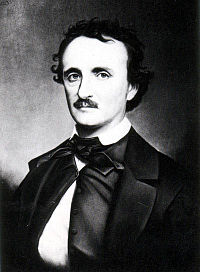
I must confess I have a love-hate relationship with Mr Edgar Allan Poe. I read his stories when I was 12 years old and received one of his books as a present. It scared me to death but I couldn't put it down.
Then at university The Fall of the House of Usher and The Raven brought us together again. And yet again, he got me in his grip, so I went up to the attic to look for that book of short stories.
This year my brother had to read The Black Cat and Other Stories for school, so it gave me the perfect excuse to read it for the third time. His writing literally creeps me out and yet I can't deny he's a master of suspense and able to paint a vivid picture in your brain.
Recently, I heard about The Following, an American TV series: FBI agent (Kevin Bacon) chasing Joe Carroll (Kevin Williamson), a former college professor who is now a serial killer. Guess what Carroll taught at college? Literature! And he killed young women in the honor of whom? EDGAR ALLAN POE. References to his works are everywhere, in the followers' names, quotations, drawings,... I've just watched episode 9 and I am oficially hooked.
Thursday, January 24, 2013
LITERARY TOUR in New York

As you may know, our school is organizing a trip to New York in February. We have decided to devote one of the days to taking a literary tour recommended in the New York Times.
Here's the link in case you're interested. It takes you to some libraries, bookstores, hotels and coffee houses somehow related to books, literature or writers. We'll tell you about it when we come back!!
Wednesday, November 21, 2012
WHY WE LIE
Why We Lie (from WSJ)
We like to believe that a few bad apples spoil the virtuous bunch. But research shows that everyone cheats a little—right up to the point where they lose their sense of integrity.Not too long ago, one of my students, named Peter, told me a story that captures rather nicely our society’s misguided efforts to deal with dishonesty. One day, Peter locked himself out of his house. After a spell, the locksmith pulled up in his truck and picked the lock in about a minute.
“I was amazed at how quickly and easily this guy was able to open the door,” Peter said. The locksmith told him that locks are on doors only to keep honest people honest. One percent of people will always be honest and never steal. Another 1% will always be dishonest and always try to pick your lock and steal your television; locks won’t do much to protect you from the hardened thieves, who can get into your house if they really want to. The purpose of locks, the locksmith said, is to protect you from the 98% of mostly honest people who might be tempted to try your door if it had no lock.
We tend to think that people are either honest or dishonest. In the age of Bernie Madoff and Mark McGwire, James Frey and John Edwards, we like to believe that most people are virtuous, but a few bad apples spoil the bunch. If this were true, society might easily remedy its problems with cheating and dishonesty. Human-resources departments could screen for cheaters when hiring. Dishonest financial advisers or building contractors could be flagged quickly and shunned. Cheaters in sports and other arenas would be easy to spot before they rose to the tops of their professions.
But that is not how dishonesty works. Over the past decade or so, my colleagues and I have taken a close look at why people cheat, using a variety of experiments and looking at a panoply of unique data sets—from insurance claims to employment histories to the treatment records of doctors and dentists. What we have found, in a nutshell: Everybody has the capacity to be dishonest, and almost everybody cheats—just by a little. Except for a few outliers at the top and bottom, the behavior of almost everyone is driven by two opposing motivations. On the one hand, we want to benefit from cheating and get as much money and glory as possible; on the other hand, we want to view ourselves as honest, honorable people. Sadly, it is this kind of small-scale mass cheating, not the high-profile cases, that is most corrosive to society…..
From Dan Ariely's Blog (his videos are also very interesting).
Monday, November 12, 2012
LET'S PUT A LITTLE LOVE IN OUR BLOG
Over 100 entries and not even one about love??? This cannot continue so and here goes my post on love and literature.
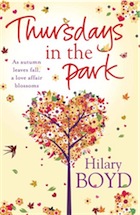
Here's a link to an article in The Guardian about a bestseller in Amazon by Hilary Boyd (by the way, did you know the term "gran-lit"?) dealing with romance between 60-somethings.
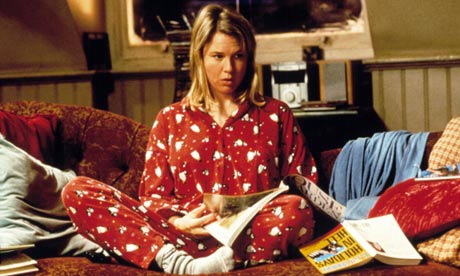
And here's another one which is good news for all those of you that voted for Bridget Jones's Diary, because it seems Helen Fielding has announced she is writing a 3rd novel about Britain's favourite singleton, due out next autumn. As for me, I confess I am praying that book does not get chosen - yeap, sorry, not my cup of tea :) Hey, needless to say, I'll read it if it gets chosen!
Saturday, March 17, 2012
WHAT DO YOUR FAVOURITE CHARACTERS LOOK LIKE? THE COMPOSITES SHOWS YOU...

Can you guess who this is? Check it out here. It's a website that creates sketch portraits of literary characters.
"Images created using law enforcement composite sketch software and descriptions of literary characters. All interesting suggestions considered. Include descriptive passages if you can. Read more on the project at The Atlantic.
Created by Brian Joseph Davis. A co-founder of the website Joyland , his work has been collected recently in Against Expression: An anthology of conceptual writing (Northwestern University Press). His music and art productions have been acclaimed by Wired, Pitchfork, Salon, and LA Weekly, which wrote, “Davis has an amazing head for aural experiments that are smart on paper and fascinating in execution.” He’s written for Utne, The Globe and Mail and The Believer."
Personally, I think I'll stick to my own mental portrait of characters... what about you?
Friday, February 10, 2012
NATHANIEL HAWTHORNE: A Wonder-Book for Girls and Boys
 You may know him as the writer of The Scarlet Letter, but he wrote other interesting books, among them, this one for children... and lovers of children's books.
Six legends of Greek mythology, retold for children by Nathaniel Hawthorne. Included are The Gorgon’s Head, The Golden Touch, The Paradise of Children, The Three Golden Apples, The Miraculous Pitcher, and The Chimaera.
In 1838, Hawthorne suggested to Henry Wadsworth Longfellow that they collaborate on a story for children based on the legend of the Pandora’s Box, but this never materialized.
He wrote A Wonder Book between April and July 1851, adapting six legends most freely from Charles Anton’s A Classical Dictionary (1842).
He set out deliberately to “modernize” the stories, freeing them from what he called “cold moonshine” and using a romantic, readable style that was criticized by adults but proved universally popular with children.
Don't you just love children's books? As for me, I must get my hands on this one.
Wednesday, December 14, 2011
MINI SAGAS
I just came across this website where they publish 50-word stories, like the mini sagas we worked with in the past. I saw this one and just wanted to share it:
"He gazed longingly, desire written in every fiber. The irresistible scent teased him. Quick slip and grab; the prize was his!
She was too fast, and caught him by the ear. Disappointment sank into the pit of his stomach.
Mother put him on time-out. No apple pie until after dinner."
"He gazed longingly, desire written in every fiber. The irresistible scent teased him. Quick slip and grab; the prize was his!
She was too fast, and caught him by the ear. Disappointment sank into the pit of his stomach.
Mother put him on time-out. No apple pie until after dinner."
Subscribe to:
Posts (Atom)